Pondering for Sunday: August 25, 2019

Eucharistic Readings for Sunday Proper 16 of Year C

Isaiah 58:9b-14 Psalm 103:1-8 Hebrews 12:18-29 Luke 13:10-17

 “When Jesus saw her, he called her over and said, “Woman, you are set free from your ailment.” (Luke 13:12)

This is not a new situation for Jesus who continually tells them, and us, that the Sabbath is made for us, not us for the Sabbath.  God brought us into the world without Sabbaths and then saw that we needed down-time in order to put things in perspective, to ponder, and to be thankful.

But this action from Jesus in healing the crippled woman is far more than just a simple healing; it is a metaphor of what Jesus is doing for all humanity.

It shows that God is teaching love to all people AND keeping Sabbaths as commanded. Jesus continues in this formula. “Now he was teaching in one of the synagogues on the Sabbath.”  (Luke 13:10) This is a time of gathering so as to learn about God and how God wants us to live with one another. If it wasn’t the Sabbath the crippled woman might not have been there in the first place.

And as the situation would have it, an unexpected opportunity appears. “And just then there appeared a woman with a spirit that had crippled her for eighteen years. She was bent over and was quite unable to stand up straight.” (Luke 13:11) This woman represents all humanity made cripple with our spiritual weaknesses.  We cannot straighten ourselves out.

“When Jesus saw her, he called her over and said, “Woman, you are set free from your ailment.”” (Luke 13:12) Jesus makes the pronouncement, the Word says the word.  That that was holding her was no longer in power. She is set free. But after eighteen years one does not just jump up and down in exaltation.  The body is not ready for that. It needs healing hands.

So “When he laid his hands on her, immediately she stood up straight and began praising God.” (Luke 13:13)  St Francis of Assisi said go out and preach the Gospel and when necessary use words.  Do you think this healed woman by just walking around joyfully and praising God is preaching the Gospel?  I do.

Meanwhile, back at hater ranch “the leader of the synagogue, indignant because Jesus had cured on the Sabbath, kept saying to the crowd, “There are six days on which work ought to be done; come on those days and be cured, and not on the Sabbath day.”” (Luke 13:14)  This leader of the synagogue could not heal like this on any day. Why then deny anybody healing no matter what day it comes on?  But the light is brought to bear on his hypocrisy as Jesus questions what any rational person would do no matter the day of the week.  Jesus’ words were pleasing to the people “and the entire crowd was rejoicing at all the wonderful things that he was doing.” (Luke 13:17)

We must remember that our time of respite is foreordained by God for our mutual benefit and personal healing.  Therefore, Let us hear what the Spirit is saying to and through God’s people. John+

Pondering for Saturday: August 24, 2019

Daily Office Readings for Saturday of Proper 15 Year 1

AM Psalm 137:1-6(7-9), 144; PM Psalm 104 2 Samuel 23:1-7,13-17; Acts 25:13-27; Mark 13:1-13

“By the waters of Babylon we sat down and wept, when we remembered you, O Zion.” (Psalm 137:1)

Psalm 137 is the saddest Psalm in the Bible for me. We never hear it in the Eucharistic lectionary I don’t think (haven’t really done the homework).  But this Psalm ends very sad; something about dashing baby’s heads against stones.  Horrible!

And yet it is genuine in its anger for what has happen to the people of God who had bad leadership.

I think all people are people of the land that they live on, and in the community in which they live their lives.  I was born and brought up in Nashville, Tennessee.  I still love the place although my brother tells me that I would not know the place now, so much has changed.

While I served in the Marines various lands were summed up as “duty stations.”  The comment most often heard is that the best duty station ever was the one you just left, or the one you are going to. It was never the one you were currently assigned.  Today many people are as transit as military folk.  Some places and or communities are more meaningful for us than others. Sometimes it’s the land, sometimes it’s the people.  A caution is served here.  Land pretty much stays the same, the mountain ridges, the valleys, the same annual temperatures with associated rainfall and such. People however, change. And sometimes, people are forcibly changed.

Sometimes whole communities are dragged off to other lands.  This happened as expressed in the Psalm above about the Israelites forcibly taken to Babylon.  And it happened in western Africa in the mid fifteenth and sixteenth centuries as people were taken from their homes and forcibly brought to the Colonies, which became the United States, and made slaves.

I heard long ago that you could take the boy out of the country but you can never take the country out to the boy.  There may be some truth to that. The Israelites longed for their homeland of Jerusalem. They lamented about it and a possible return.  I think also they learned much from their experience in Babylon. I have learned that they first put their ancient history in writing while in Babylon. To that point their history was contained in oral stories. This is something to ponder later.

I think we all can learn to appreciate any place on earth as long as we are in good fellowship with God loving people who strive to create an environment where all have the opportunity to be what God has created us to be. A place not forced on us.  We will sing our old songs and we will create new ones that our children will sing. We will learn to share the joy and create hope for all.

Let is hear what the Spirit is saying to and through God’s People.  John+

Pondering for Friday: August 23, 2019

Daily Office Readings for Friday of Proper 15 Year 1

AM Psalm 140, 142; PM Psalm 141, 143:1-11(12) 2 Samuel 19:24-43; Acts 24:24-25:12; Mark 12:35-44

“Set a watch before my mouth, O Lord, and guard the door of my lips; let not my heart incline to any evil thing. (Psalm 141:3)

So this verse of Psalm 141 reminds me of James’s letter where in parts of it he informs us about the negative attributes of the tongue. “With the tongue we praise our Lord and Father, and with it we curse human beings, who have been made in God’s likeness. Out of the same mouth come praise and cursing. My brothers and sisters, this should not be.” (James 3:9 – 11)

I have found in my life that in conversations where feelings are tested, it truly is better to have said nothing than to have said something I will regret later. More times than not I have found myself wishing I had not said something that I shouldn’t have said; than wishing I should have said something I didn’t say. And as I ponder these ideas I learn that if I am going to err, I want to err on the side of not speaking when I should have.  This is just where I am at this moment in my life.  It might be different tomorrow or next week.  You must decide for yourself where you are in this matter of when to speak and not to speak.

Maybe it might be a matter of how much to speak.  For example, when I disagree, I could just let my no, be no rather than adding a defense which often leads to a put-down of the person who differs from me. This is what Jesus said in Matthew, “Let your word be ‘Yes, Yes’ or ‘No, No’; anything more than this comes from the evil one.”  (Matthew 5:37)

The second part of this verse is important too.  Sometimes a nastiness welds up in my heart that oozes out of my lips and makes me regret I spoke.  Such oozing is not who I am.  But it happens. Sports announcers that I have really liked have been fired for random (so-called racist) statements made on the air.  There was no pardon or forgiveness or even counseling. No, they were just fired and told to leave. In my heart I don’t believe they were bad people.  What they said does not define who they were. We need to do better as a society, and definitely as Christians.

I will say that not everything I say defines who I am.  I make mistakes. I need to be forgiven. And so should others, especially those who have shown to be good people who made one slip.  Forgiving is Christian. It’s what we do.  If what we say that is bad seems “repeatedly” to come from a hateful or unloving heart, then that heart is what needs to be addressed.  This is where we pray “Cleanse the thoughts of our hearts by the inspiration of Your Holy Spirit that we may perfectly love you.”  (BCP p. 355)  God did not design us with the capability to repair our own hearts. We must go back to the Manufacturer. The Repairer awaits!

Bottom line: I think we need to run any words that come from the heart through our conscience before releasing them to the lips. And even the “I don’t know, but…” should be quieted and not allowed to have air time until properly screened.

Let us hear what the Spirit is saying to and through God’s people. John+
Pondering for Thursday: August 22, 2019

Daily Office Readings for Thursday of Proper 15 Year 1

AM Psalm 131, 132, [133]; PM Psalm 134, 1352 Samuel 19:1-23; Acts 24:1-23; Mark 12:28-34

“I have a hope in God—a hope that they themselves also accept—that there will be a resurrection of both the righteous and the unrighteous.” (Acts 24:15)

I believe in the Resurrection.  I believe that all humanity must give an account of their lives, that is, if they had any opportunity to make choices and didn’t die as infants or total slaves all their lives.  I know I’m no saint but I also believe in a God of mercy.

I think our God of mercy will be loving even to those of us who were not loving to one another. This might be a good time to review my own personal creed again. It is Trinitarian but does not name historical people but rather focuses on day to day personal accountability. It is thus: “I Trust in the Creating Word through the Holy Spirit of the Incarnate Word, in whom we live and move and love and have our being, and to whom we must give an account.”

I think in the resurrection we will be aware of our own souls and the souls of others.  We will not so much see their earthly shell but feel them.  They will not have, nor will we have the façade of race, or ethnicity, or gender, or orientation, or any outer quality once deemed important in this life. We will be what our inner souls have been fashioned to be through our works and prayers.  We must learn to live that way now so that we might be better prepared to live in eternity.  We must put aside every falsehood of race and gender and orientation and ethnicity and nationality and everything that separates us from one another because in separating ourselves from each other we separate ourselves, not from God, but from what God wants for us.

In our Gospel reading for today Jesus answers the question of what is the greatest of the Commandments:  “Jesus answered, ‘The first is, “Hear, O Israel: the Lord our God, the Lord is one; you shall love the Lord your God with all your heart, and with all your soul, and with all your mind, and with all your strength.” The second is this, “You shall love your neighbor as yourself.” There is no other commandment greater than these.”  (Mark 12:29 – 31)  This love for God and for neighbor as one’s self is exactly what we need to practice now, in this life.

In our Acts reading Paul stands before the Governor and his accusers proclaiming his hope of the resurrection. At this point he realizes it’s all he has.  It is also all we have. This life is a preparation for eternal life. What we amass in materialism in this life has no connection to our life in the resurrection. However, our faith in God and our determination to do good for Jesus’ sake carries the blessed hope of the resurrection of which Paul spoke of.  He says, “I have a hope in God—a hope that they themselves also accept—that there will be a resurrection of both* the righteous and the unrighteous.” I believe that unless you are an infant or kept in total slavery you make choices that prepare you for the resurrection of which Paul spoke.

Let us hear what the Spirit is saying to, and through, God’s people. John+

Pondering for Wednesday: August 21, 2019

Daily Office Readings for Wednesday of Proper 15 Year 1

AM Psalm 119:145-176; PM Psalm 128, 129, 130 2 Samuel 18:19-33; Acts 23:23-35; Mark 12:13-27

“The king was deeply moved, and went up to the chamber over the gate, and wept; and as he went, he said, ‘O my son Absalom, my son, my son Absalom! Would that I had died instead of you, O Absalom, my son, my son!’” (2 Samuel 18:33)

This is the third son that king David has lost.  The first was the baby born to Bathsheba, and then Amnon who was killed by Absalom.  After the death of the baby David lamented for seventeen days until his servants told him the baby died; after which, he composed himself and returned to do his work.(See blog for August 10)   And now Absalom has been killed.  David is really hurt.  Even though Absalom wanted to kill David, David would rather have died instead of his son Absalom. In this death David’s men bring him around by reminding him that his troops who vowed to give their lives for him were more loyal and loving to him than his son Absalom was.

This is the way it is with faith and believing.  I love my family. Life (and God) has brought me into a new family of faith.  I am reminded of when Jesus was told that his mother and siblings were asking for him:  “While Jesus was still talking to the crowd, his mother and brothers stood outside, wanting to speak to him. Someone told him, “Your mother and brothers are standing outside, wanting to speak to you.”  He replied to him, “Who is my mother, and who are my brothers?” Pointing to his disciples, he said, “Here are my mother and my brothers. For whoever does the will of my Father in heaven is my brother and sister and mother.” (Matthew 12:46 – 50)

While this sounds rough, I have found that the people I worship with and pray with have more in common with me that those who share my DNA. I still love my biological family and people have told me that blood is thicker than water.  And, to that I say, faith is thicker even than blood.  Jesus points to those who seek God as those who are closer to him.  Jesus doesn’t just ask us to pick between him and the devil.  He asks us to pick him first, even above family.  I have found that I am able to love family even more when I live them through Jesus. David didn’t have this option.

David has experienced the death of some of his children; more than just the baby and Absalom there was also Amnon for whom he mourned (2 Samuel 13).  So what must God feel at the death of Jesus?  Wow! Are we worth what God suffers for us?  Jesus makes us worth it.  Jesus has added value to our lives by making us holy before God through his sacrifice on the cross.

There is a big difference between David’s children dying and Jesus dying.  David, like God, loved his child. But Jesus was loyal and loving back to His (our) Father in Heaven as well.  Jesus’ death was the atonement for us, for our sins, and for our eternal salvation.  Big difference.

Let us hear what the Spirit is saying to and through God’s people.  John+

Pondering for Tuesday: August 20, 2019

Readings for  Bernard of Clairvaux

Psalm 139:1–9Ecclesiasticus 39:1-10John 15:7-11

“He serves among the great and appears before rulers; he travels in foreign lands and learns what is good and evil in the human lot.  He sets his heart on rising early to seek the Lord who made him, and to petition the Most High; he opens his mouth in prayer and asks pardon for his sins.”  (Ecclesiasticus 39:4 – 5)

I hope these words from Ecclesiasticus are fitting for Bernard of Clairvaux, whom we remember today, 20 August. The below is from “Great Cloud of Witnesses for August 20” (GCW Aug 20)

“Bernard was the son of a knight and landowner who lived near Dijon, France. He was born in 1090 and given a secular education, but in 1113 he entered the Benedictine Abbey of Citeaux. His family was not pleased with his choice of a monastic life, but he nevertheless persuaded four of his brothers and about twenty-six of his friends to join him. After only three years, the abbot of Citeaux deployed Bernard and a small company of monks to establish a monastery at Clairvaux in 1115.”  (GCW Aug 20)

“The work at Clairvaux, and the extreme rigors of the Benedictine rule practiced by the Cistercian community, were taxing.  Tasked with much, Bernard denied himself sleep to the detriment of his health that he might have time to write letters and sermons. He preached so persuasively that sixty new abbeys were founded, all affiliated with Clairvaux. Famed for the ardor with which he preached love for God “without measure,” he fulfilled his own definition of a holy man: “seen to be good and charitable, holding back nothing for himself, but using his every gift for the common good.” (GCW Aug 20)

“By 1140, his writings had made him one of the most influential figures in Christendom. His guidance was sought by prelates and princes, drawing him into active participation in all manner of controversy involving the Church, from settling disputes among secular rulers to sorting contentious theological debates. An ardent opponent of a growing movement of his time to reconcile inconsistencies of doctrine by reason, he felt that such an approach was a downgrading of the mysteries. This conflict took particular expression in his fierce opposition to the formidable theologian, Abelard.”  (GCW Aug 20)

When a former monk of Clairvaux was elected Pope Eugenius III, papal reliance upon Bernard grew. (AGW Aug 20)  Bernard preached a sermon that ignited the crusade that opened and protected roads to Jerusalem and the Holy Land. This was the birth of the Knights of the Temple or Knights Templar.  And while the second crusade was a failure his first gallant effort is remembered by Masonic Knights Templar of today.

Sea (Lake) of Galilee, Israel
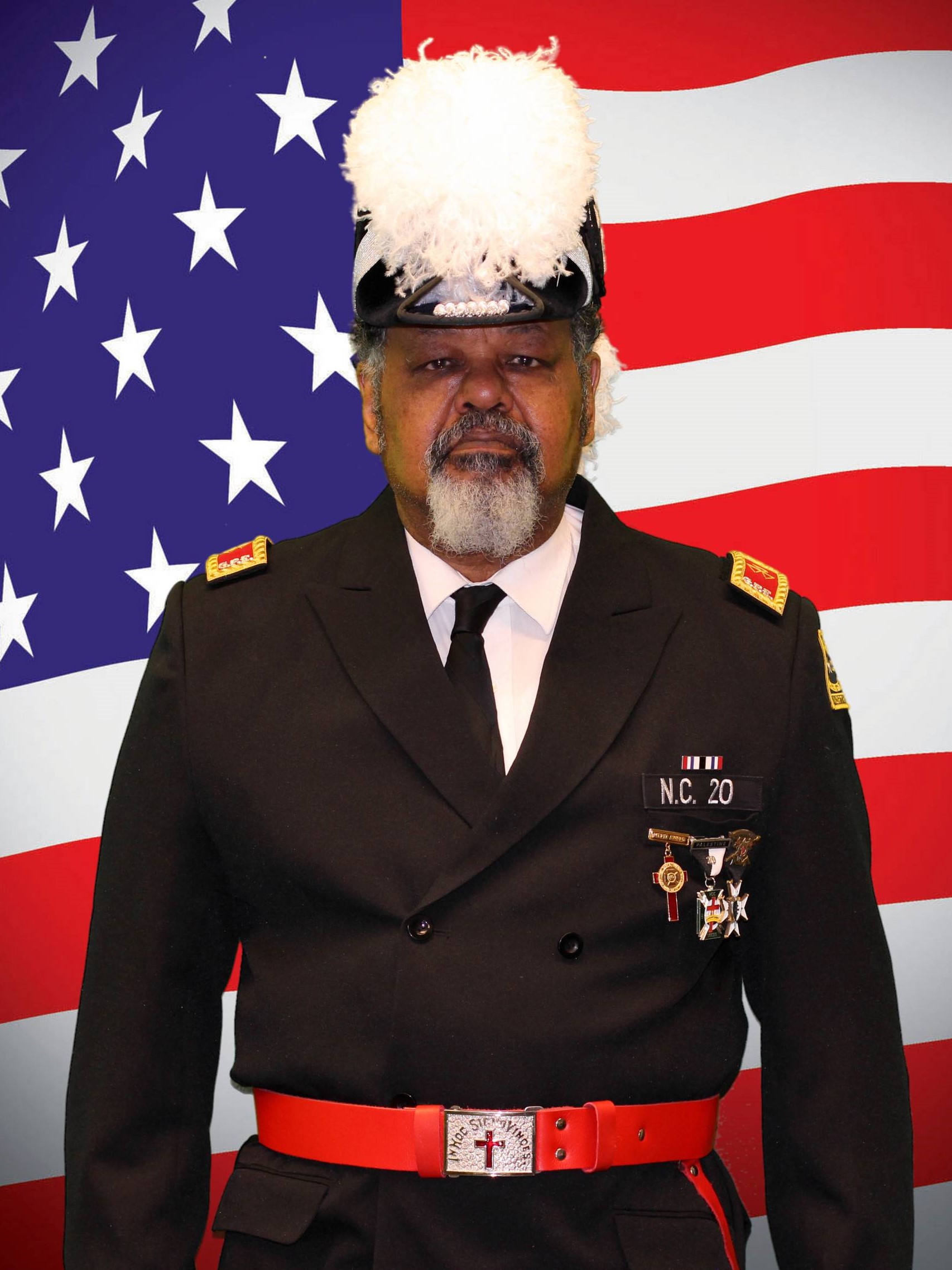
The Reverend John Thomas Frazier Sr. Grand Prelate of North Carolina Knights Templar

Knights Templar of today, of which I am one, continue to provide trips for Christian clergy (men and women of all Christian stripes) tours to the Holy Land, of which I have been blessed to benefit from. 

I think Saint Bernard of Clairvaux  would be proud of his legacy and what God continues to do working through us, and for us.

Let us ponder anew what the Almighty is doing.

Sir Knight John Thomas Frazier (Grand Prelate of Knights Templar of North Carolina 2017, 18, 19)

Pondering for Monday: August 19, 2019

Daily Office Readings for Monday Proper 15 Year 1

AM Psalm 106:1-18; PM Psalm 106:19-48 2 Samuel 17:24-18:8; Acts 22:30-23:11; Mark 11:12-26

“He said to it, ‘May no one ever eat fruit from you again.’ And his disciples heard it.” (Mark 11:14)

On his way to the Temple, where he will throw out the money-changers, Jesus curses a fig tree. “The fig tree is a symbol of Israel, embodied in the Temple and its leaders. Each appears to be thriving; neither is bearing the desired fruit; both are condemned by Jesus.” (Lamar Williamson, Jr. writing for Interpretation: a Bible Commentary for Teaching and Preaching: Knox Press 1983 p. 206)

All too often the Temple, the Church, the clergy, and the people look good on the outside.  But, are they bearing any fruit?

I knew a man once who was in charge of a library on a military base specifically established with books, magazines and other materials for assisting separating service members as they were returning to civilian life. The library looked good, perfect in fact.  The problem was that the man in charge wanted everything to stay that way.  When someone would come in to borrow or make use of the materials the man in charge would helicopter over the users to the point that they couldn’t copy or checkout anything.  The manager wanted everything to stay in perfect order in the event there was a surprise inspection.  The end result was that the place was useless; no fruit.

If we are not careful our houses of worship will be the same way.  We must be “user friendly.”  We need to go out of our way to ensure our facilities are at the disposal of worthwhile initiatives like AA, feeding stations for out of school children, and other neighborhood groups that need a place to organize and do good works.

Also, we need to move out and do those good services that require us to be Christ in community like providing transportation for people wanting to go to church or to the hospital or pharmacy. We need to make sure that food and other provisions placed in our care actually arrive at their intended destinations.

All of these kinds of things and more are the fruit that God is looking for.  We are not in the community just to look good; but to do good, to bear fruit.

Let us ponder anew what the Almighty is doing. John+

Pondering for Sunday: August 18, 2019

Eucharistic Readings for Sunday Proper 15 Year C Track 2

Jeremiah 23:23-29 Psalm 82 Hebrews 11:29-12:2 Luke 12:49-56

“Do you think that I have come to bring peace to the earth? No, I tell you, but rather division!”  (Luke 12: 51)

Jesus is now informing them and us that a moment of decision has come and we must decide which side we are going to fall out on.  This is literally a fork in our faith road.  It is to believe or not to believe and then to act accordingly. To turn toward one person or value or goal is to turn away from another. “Peace in the sense of status quo has been disrupted.” (Says Fred B. Craddock writing for Interpretation; a Bible Commentary on Luke p. 166)

God is acting toward the world in Jesus of Nazareth and has created a breaking point.  We must break to one side or the other. We cannot have it both ways. It is one thing to say that you don’t believe in God or Jesus or the Church.  It is a much weightier thing to try to live that out. Lord have mercy.  We all are going to be thrown out of this life. And there is only One who will catch us, if we are to be caught.

When I told my mother many years ago that I had joined the Episcopal Church I noticed a sudden sense of urgency in her. She wanted to know if I believed in Jesus.  And, she wanted to know if I still celebrated Christmas and Easter.  After I assured her I did to all of the above, she was fine. I am always amazed about how little people know about the Episcopal Church.

While my mother did not bring us up as a “churched family,” It was important to her that we trusted in Jesus.  She wanted to us to believe. This brings us back to the division that Jesus talks about in Luke today.  There will be division on this issue even within households and families. What does it mean to choose on the side of Jesus? I have found four paths and a possible fifth.

First, If you believe in Jesus you already believe in God. And God is good, All the time.

Second, you can believe God sent Jesus or that God is in Jesus. Christian churches have waged war over this issue rather that care for the needy. They seemed to worry more about what people say they  believed about Jesus rather than how they followed Jesus.

Third, believing in Jesus means we are called together with like-minded (not hate minded) worshipers weekly to remember him in the Sacraments, the Body and Blood as He commanded us to do.

Fourth, (and this is too often missed) we are called to care for those who differ from us: Even those who don’t believe, to feed them, clothe them, heal them, and when the time comes, to bury them.

The possible fifth path is, to teach and baptize and or confirm those who want to come and join us.

This is a division, a breaking point in our faith lives. Often it is a thankless decision of division. But this is what Jesus came to do.  He says, “Do you think that I have come to bring peace to the earth? No, I tell you, but rather division!”  And he has done it. This is the Baptism he came to receive and is now completed. A decision of division lies in your path. Which way will you go?

Let us ponder anew what the almighty is doing.  John+

Pondering for Saturday: August 17, 2019

The Remembrance of the Baptisms of Manteo, and Virginia Dare 1587 August 17

“As they traveled along the road, they came to some water and the eunuch said, “Look, here is water. What can stand in the way of my being baptized?”  (Acts 8:36)

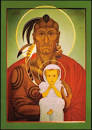
  This is an Icon of the Episcopal Diocese of East Carolina

This is the history of how Baptism from the Church of England came to the Western Hemisphere. It is how God’s hand works on the planet God gave us, this earth, our fragile home.  This is a story about the development of the fetus of the Episcopal Church just over four hundred years ago.

“In the late sixteenth century, Sir Walter Raleigh established three colonies along the northeastern coast of what is now the state of North Carolina. In July 1587, the third and final settlement, consisting of 120 men, women, and children, under the leadership of John White, landed on Roanoke Island, near the present-day community of Nags Head.”  (Great Cloud of Witnesses for August 17)

While the icon shows them together, they were not, and certainly not baptized together. “On August 13, 1587, Manteo was baptized, the first recorded baptism of the Church of England in the American colonies and the first recorded baptism of a Native American person in the Church of England. On August 18, Governor White’s daughter Eleanor and her husband Ananias Dare celebrated the birth of their first child, Virginia. The first child born to English settlers on the North American continent, Virginia’s baptism on August 20 was the second recorded baptism in the Church of England in North America.”  (Great Cloud of Witnesses for August 17)

“Governor White returned to England in late August 1587 to obtain badly needed supplies. It was understood that if the colonists were forced to abandon the settlement in White’s absence, they would carve the name of their destination on a tree. If their departure were due to attack, a Maltese cross would be carved beneath. Delayed by events beyond his control, White was unable to return to the colony for three years. It was not until August 18, 1590, that White finally arrived at the site of the village. White found the word “Croatoan,” with no carved cross or other signs of distress, carved into a post of the fort. Little certainty surrounds the fate of the English settlers, who remain known to history as the “Lost Colony.” (Great Cloud of Witnesses for August 17)  And I might add, while they are lost, they are not forgotten.

While God’s hand is at work at all times in our lives, we too get lost to one another.  But we are not forgotten. What can stand in the way of anyone being baptized,for once done, it is eternal? 

So lets us ponder anew what the Almighty can do.  John+

Pondering for Friday: August 16, 2019

Daily Office Readings for Friday Proper 14 Year 1

AM Psalm 102; PM Psalm 107:1-32 2 Samuel 15:19-37; Acts 21:37-22:16; Mark 10:46-52

“Then Jesus said to him, ‘What do you want me to do for you?’ The blind man said to him, ‘My teacher,let me see again.”   (Mark 10: 51)

Blind Bartimaeus could, at an earlier time, see.  We know this because he asks to see “again.”  He wanted his sight back. Maybe we too could see clearly at one time but somehow got distracted by social events, by faithless peers, by non church nonsense.  We too should ask Jesus if we can see again.  Please Jesus, Son of David, let me see with hope and faith like I used to.

Saul (in Acts) was blinded so that Paul could see! He was given new sight so that he could see what God wanted of him. When we are made to see clearly the love of Christ and how we are able to love more authentically we too become new people. We may not change our names but we are new and different and with new vision.  I have talked to many people who came to the Episcopal Church late in life.  Most of them say they found a spiritual home where they can fully express themselves.  We are not a church of “our way or the highway”; we are a church of Yahweh.

New sight or deeper insight may be the question we might want to ask ourselves.  There have been so many times that I have read passages in the Bible and took off with an idea of what God wanted of me.  And then later in life, I read the same passage and got an entirely new message.  They were the same words but the words said something new to me; it said something deeper, more loving. Both Bartimaeus and Saul/Paul came to Jesus with an undeniable faith. Jesus uses Bartimaeus’ faith to give him back his sight and uses Paul’s faith to put him on the right path.  My sight too is on a continual path of improvement; funny how that works. Our eyesight diminishes as we age but our spiritual sight can improve over time.

The eye of our mind is so important. The ability to see perfection gives us something to strive for.  Similar words were spoken at an ordination I went to some time ago. The newly ordained person said that he heard a famous jazz musician say that “if we can see excellence or perfection, we can aim for it.”   If we can see it, we can attain to it. God is acting in our midst.  We are too often blind to it.  At St Paul’s we use Eucharistic Prayer C during the summer. In that prayer we ask God to “Open our eyes to see your hand at work in the world about us.” (BCP p. 372)  We ask this at Holy Communion so that our eyes might be opened and that we too might see again and with more clarity. Not only do we want to see God’s hand at work in the world but we want to be God’s hand in the world. But, it’s hard to reach out and touch what we cannot see.

So when the world tells you to hush, but then tells you that Jesus heard you and wants you to come to him, what do you want from Jesus?  How about a change of perspective?  Most things in life are dependent on how we see them, glass half full or empty.  As the saying goes, there is always a “bright side” to everything. Jesus can do anything for you but perhaps the best thing to do for you or me is to let us see more clearly through God’s love for us, even a shared love for those who first told you to hush.

Let us ponder anew what the Almighty can do. John+