Health Pondering

I notice that in all the Gospels some of the first work that Jesus does is to heal.  Human health is very important to him. People around the Mediterranean ate non processed foods and walked everywhere.  They already lived a healthier lifestyle than we do.  Still, some got sick.  It’s bound to happen to all of us sooner or later.  So in the Galilean neighborhoods it was Dr. Jesus who traveled around healing people of both physical and Psychotic (demon possessed) diseases.  Ultimate healing however was spiritual healing. This means being saved.  This is not necessarily being saved in this world for this world, but rather being saved in, and for, the next world and eternal life.  Jesus got people through physical and mental ill health so that they could accept the invitation to have spiritual redeeming.

I think we all should have a program of healthy eating and regular walking.  It is who we are created to be, walkers, by-pedal, walkers.  And to nourish ourselves, we should eat fresh fruits and vegetables.  Being like Jesus means more than just reading about what Jesus did.  Jesus did not leave us any written material.  But we do have the history of the life of the Palestinian Jews of his day. We know something about his diet and that he was a blue collar worker in construction (maybe woodworking) and that he walked all over Israel and Judea. Why don’t we have preachers trying to get us to diet and exercise in a Christian way?  If we “follow” Jesus for miles, we may not need Dr. Jesus, except for the spiritual healing part.

Let us hear what the Spirit is saying through and to God’s people and “Ponder anew what the Almighty can do.”  John Thomas Frazier Sr.

Readings and Pondering for Friday 22 March 2019 Lent

Readings for March 22 James De Koven Priest and Teacher, 1879

Psalm 132:1-7Exodus 24:1-8 2 Timothy 2:10-15,19Matthew 13:47-52

“I will not allow my eyes to sleep, nor let my eyelids slumber”

 Until I find a place for the Lord, a dwelling for the Mighty One of Jacob.” (Psalm 132:4-5)

My Pondering

The Psalmist speaks of his personal life rituals.  He talks about his rule of life regarding God.  I can surely identify with that.  Personally I can’t put any food in my mouth unless I first thank God in some way, even if just a small “thank you Jesus.”  James De Koven who we remember today was also a man of ritual – a man of traditions.

James De Koven was born in Middletown, Connecticut, on September 19, 1831, ordained by Bishop Kemper in 1855, and appointed professor of ecclesiastical history at Nashotah House. (From Great Cloud of Witnesses)

De Koven came to national attention at the General Conventions of 1871 and 1874, when the controversy over “ritualism” was at its height. In 1871, he asserted that the use of candles on the altar, incense, and genuflections were lawful, because they symbolized “the real, spiritual presence of Christ” which The Episcopal Church upheld, along with the Orthodox and the Lutherans. (From Great Cloud of Witnesses) 

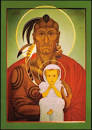
I agree. I pray with Prayer Beads, candles, Native American flute music and Icons of Mary and the Baby Jesus.  I so understand the use of things made with our hands as tools to assist in the worship of God, things like the Bible itself and our Book of Common Prayer.  God gave us memory reason and skill so that we might more authentically honor God.

Despite calls to serve at prominent parishes in New York City, Boston, Cincinnati, and Philadelphia, De Koven remained in his post at Racine College, where his students admired him as “a model of great learning, gracious manners, personal holiness, and extraordinary compassion.” (From Great Cloud of Witnesses)  

Again I too never looked past the little parish I was called to serve straight out of seminary (St Paul’s in the Pines).  I don’t know if I have any of De Koven’s other qualities.  I do know that I see life as a liturgical dance.  There is a proper way to do most things, especially things that matter such as eating, sleeping, and taking care of people we love and worship of the Almighty.  And the proper way to do these things is to pray before, during and after each is done.  We pray through them.

Let us hear what the Spirit is saying through and to God’s people and “Ponder anew what the Almighty can do.”  John Thomas Frazier Sr.

Pondering Explained

I am one who first and foremost attempts to think about life’s purpose very deeply.  My Christian faith coaches me in my thinking.  I have shared before my situation wherein I was taking Chemistry and Philosophy at the same time in undergraduate school and considered the sort of chicken and egg decision regarding which came first, simple atomic structure, or thought.  I came out on the side of thought.  I then realized that the Thought (God) that brought about atomic structure into being must be the Supreme Thought that brings in all things, the cosmos and our own molecular makeup, into being.

I then needed a way to capture the way I thought about this relationship between God and me.  As I remember reading in Scripture about when Mary (earthly mother of our Incarnate God) was visited by a messenger of God and how she wrestled with such an epiphany. Her experience is explained that, “In the sixth month the angel Gabriel was sent by God to a town in Galilee called Nazareth,  to a virgin engaged to a man whose name was Joseph, of the house of David. The virgin’s name was Mary.  And he came to her and said, “Greetings, favored one! The Lord is with you.” But she was much perplexed by his words and pondered what sort of greeting this might be.” (Luke 1:26-29 NRSV)  And again after she gave birth and mortal shepherds shared with her what they experienced when they were visited by divine beings. It is said of her:  “But Mary treasured all these words and pondered them in her heart.”  (Luke 2:19 NRSV)  So I ponder too.  Thank you Mary, Luke and the NRSV.

My Pondering is not limited to Church and Bible

Pondering is not for the faint of heart.  To ponder is to take words, thoughts and ideas into the mind and move them around like marbles over prearranged holes and see how they fit and look with their various colors – what they might look like when settled.  My God-given, prearranged holes line up for Christian spirituality, Health and Fitness, and Music.  So, like Mary, as I ponder these subjects in my heart, I grow in the three different ways that Christian Spirituality, Health and Fitness and Music develop and define me. As I continue to move forward with my “onewhoponders” page I will drift from one topic to another staying within the three-fold framework of Christian Spirituality, Health and Fitness, and Music. I invite you to develop your own direction that The Spirit is leading you. And, I also invite you to follow me on my journey as I continue to discern what the Spirit is saying to me as I ponder anew what the Almighty is doing.

Let us hear what the Spirit is saying through and to God’s people and “Ponder anew what the Almighty can do.”  John Thomas Frazier Sr.

Readings and Pondering for Thursday 21 March 2019 Lent

Readings for Benedict of Nursia 540

Psalm 119:129-136Proverbs 2:1-9Philippians 2:12-16Luke 14:27-33

Philippians

 “Do all things without murmuring and arguing” (Philippians 2:14)

My Pondering

Today we remember Benedict of Nursia, considered to be the Father of Western Monasticism. Benedict’s day seems to have moved.  I remember it being in July. Having said that I can remember our studies in Seminary.  It was late one night as we were all getting ready of bed and we were thinking about theRules at Virginia Episcopal Seminary.  Some of the “thinking” was made manifest in complaining.  As we had been studying a booklet on Benedict’s Rule that morning, one of us reminded the rest of us that “there shall be no murmuring.”  We all laughed and went on to our respective rooms quietly.  The quote from Philippians above reminded me of that night.

Benedict was born at Nursia (Norcia) in Umbria, Italy, around 480 AD. He was sent to Rome for his studies, but was repelled by the dissolute life of most of the populace, and withdrew to a solitary life at Subiaco. He withdrew to a cave where, according to some reports where there was at least one other man already there, where he studied and (I might add) pondered.  He soon attracted other men to follow in his path of solitude and prayer.  This led to the order he created with vows and most famously, The Rule, that assisted in maintaining the order.

A Benedictine monk takes vows of “obedience, stability, and amendment of life.”  The Benedictine monk promises to obey the abbot, to remain in the order and to the amendment of life to that of piety, prayer and work. An average day includes about four hours to be spent in liturgical prayer, five hours in spiritual reading and study, six hours of labor, one hour for eating, and about eight hours for sleep. The Book of Psalms is to be recited in its entirety every week as a part of the Office.

I think what I really like (the take-away) is the idea that we are not to murmur, or complain about life in the vocations we have chosen.  Too many of us today fuss about every little inconvenience.  We have to learn to accept and deal with inconvenience from time to time.  I have learned that come inconvenience turns out to be unexpected opportunity.

Let us hear what the Spirit is saying through and to God’s people and “Ponder anew what the Almighty can do.”  John Thomas Frazier Sr.

Readings and Pondering for Wednesday 20 March 2019 Lent

Readings for Cuthbert of Lindisfarne, Bishop and Missionary  (20 Mar 687)

Psalm 104: 32-35 Isaiah 55:6-12 Romans 12:6-13 John 10:25b-30

Psalm 104

“May my meditation be pleasing to him, for I rejoice in the Lord.” (Psalm 104:34)

My Pondering

I meditate.  As a spiritual companion I encourage meditation to all who sit in consultation with me.  I also encourage journaling.  Many of my spiritual companions express an aversion to journaling.  I’m still working on them.  Today we remember Cuthbert of Lindisfarne.  What I know of him comes from James Kiefer as reported www.satucket.com/lectionary/Cuthbert.htm

It seems Cuthbert, like many monastic religious, really preferred the life of prayer and solitude with meditation.  But it was not to be for Cuthbert.  And I must say, almost every religious person that I have studied reached a point where they had to engage the community in which they lived for the spiritual and physical health of that same community.  “Although his real preference was for the solitary life of a hermit, he recognized a duty to minister to the needs of the people about him.” (Kiefer)

Cuthbert had somewhat a gift for negotiations. And although he had grown up in a system that was being phased out he assisted in the transitioning of his worship culture into the tradition of Rome.   “Although Cuthbert had been brought up in the Celtic customs, he accepted the decrees of the Synod of Whitby in 663, which committed the English Church to following instead the Roman customs that had been introduced into Canterbury by Augustine, and so he helped to minimize contention over the decision.”  (Kiefer)

Another request I ask my spiritual companions to do regularly is to pray.  And as they come to see me I inquire of the prayer life.  I don’t want to know the content of their time with God just that they did and how was it for them.  Soon they realize that the line between prayer and meditation diminishes.  Finally they realize that some prayer is made manifest in meditation and it is to the glory of God that they are thankful for and to whom they give glory to like the Psalmist says, “May my meditation be pleasing to him, for I rejoice in the Lord.”

Cuthbert served the people faithfully as best he could often traveling great distances to do the will of God.  It did not go unnoticed. “Theodore, the Archbishop of Canterbury, made Cuthbert Bishop of Hexham, but he was a solitary by nature, and promptly exchanged bishoprics with Eata so as to remain at Lindisfarne. After two years, he retired to the neighboring island of Farne as a hermit, and died there the following year.”  (Kiefer)

None of us knows where we will end up as we do the work God has given us to do.  The only thing we can do is to do such work to the best of our abilities with a prayer in our hearts and on our lips thanking God for the opportunity to do it.  Cuthbert demonstrated the gift of walking people into new ways of worshiping and serving God and making them feel welcome in that new way to worship and serve. The truth is, we are all evolving spiritually.  In two minutes, two hours, two days, two weeks, two months or two years, you could be a whole new spiritual person.  Ask Paul.

Let us hear what the Spirit is saying through and to God’s people and “Ponder anew what the Almighty can do.”  John Thomas Frazier Sr. mat1

Readings and Pondering for Tuesday 19 March 2019 Lent

Readings for Joseph, Earthly father of Jesus

Daily Office:  AM: Psalm 132; Isaiah 63:7-16; PM: Psalm 34; 2 Chronicles 6:12-17; Ephesians 3:14-21;  Matthew 1:18-25 

Matthew

 But after he had considered this, an angel of the Lord appeared to him in a dream and said, “Joseph son of David, do not be afraid to take Mary home as your wife, because what is conceived in her is from the Holy Spirit.  She will give birth to a son, and you are to give him the name Jesus, because he will save his people from their sins.” (Matthew 1:20-21)

My Pondering

Let us see Joseph through Matthew’s eyes.  Matthew is trying to make a connection between Jesus and the fulfillment of the Hebrew Scriptures.  He shows that in the linage of Joseph there are repeating names of father and son like names of our ancient parents. “And Jacob the father of Joseph, the husband of Mary, and Mary was the mother of Jesus who is called the Messiah.” (Matthew 1:16)  So Jacob, of Genesis, was later called Israel who had a son named Joseph (of the coat of many colors), who was sold into slavery and later became in charge of Egypt’s resources and made homes for Israel to move down to Egypt.  So this repeating of the holy names is special.

Matthew speaks of our New Testament Joseph as one who ponders (I like that word).  He pondered how he might let go of Mary after seeing that she was already pregnant.   But after he had considered this, an angel of the Lord appeared to him in a dream and said, “Joseph son of David, do not be afraid to take Mary home as your wife, because what is conceived in her is from the Holy Spirit.  She will give birth to a son, and you are to give him the name Jesus, because he will save his people from their sins.” (Matthew 1:20-21)   We have no words from Joseph only obedience.  He does as he is told.  It is important to note here that he is told the child will save us from our sins!  That’s a big deal in and of itself, perhaps for another Ponder blog.

When Herod (the so-called Great) was on a baby killing spree, Joseph was told to take the baby and go to Egypt.  “So he got up, took the child and his mother during the night and left for Egypt” (Matthew 2:14).  Again, he showed unquestioning obedience for the welfare of his family.

Later, After Herod died, an angel of the Lord appeared in a dream to Joseph in Egypt and said, “Get up, take the child and his mother and go to the land of Israel, for those who were trying to take the child’s life are dead.” (Matthew 2:19-20)  More faithful fatherhood is modeled.

As a father myself, I have some idea of what it means to care for children, whether they are biological or not.  Fatherhood is so special.  Our human existence depends on the “big brother” approach of men caring for young children.  It is not so much about being a disciplinarian but rather an example setter and coach. It is about being supportive of the mother especially when she is the one doing most or all of the leadership.  It is not about being the boss, but rather sharing in the tensions and troubles that come to the family from time to time.

There is a non-spoken presence of Joseph in Luke worthy of note.  Jesus is lost as far as Mary and Joseph are concerned.  However we only hear from his mother, “and his mother said to him, ‘Child, why have you treated us like this? Look, your father and I have been searching for you in great anxiety.’”  (Luke 2:48)  Joseph again says nothing and yet, in his silent strength, he is the epitome of fatherhood.  I can see him standing in agreement with Mary yet not being overbearing.  Come on dads, let’s be like Joseph.

Let us hear what the Spirit is saying through and to God’s people and “Ponder anew what the Almighty can do.”  John Thomas Frazier Sr.

Readings and Pondering for Monday 18 March 2019: Lent

Cyril of Jerusalem Bishop and Theologian (18 March 836)

Readings for Cyril:

Psalm 122 Ecclesiasticus 47:8-10 Hebrews 13:14-21 Luke 24:44-48

Luke

“Then he opened their minds to understand the scriptures” (Luke 24:44-48)

My Pondering

Today we remember Cyril of Jerusalem of the fourth century.  Cyril had an on again, off again, bishopric in Jersalem where he was born early in the same century.  The issue was his decision to stand by our creed as developed in Nicea, known today as our Nicene Creed.  It was the affirmation that Jesus was/is of one substance with God. I often ponder that if we love Jesus and realize there is an undisputable connection between Jesus and God, why are we getting so wrapped around the axle about that when we should be out doing the work that Jesus as set for us to do.  We should just live with the mystery.

It is a shame that we have closed our minds to doing the work of feeding the hungry that are right next to us because we are concerned about what other people think about the mystical make-up of Jesus.  As the verse says in Luke, we really need Jesus to open our minds to understand the scriptures. Jesus also told them that the people around us need consolation and peace.  We are focused on the degree of who Jesus is rather than following his instruction and caring for the lost all around us.  These are the ones we should be concerned about.  The next verse in Luke has Jesus saying, “and he said to them, ‘Thus it is written, that the Messiah* is to suffer and to rise from the dead on the third day, and that repentance and forgiveness of sins is to be proclaimed in his name to all nations, beginning from Jerusalem. You are witnesses of these things.” (Luke 24:46 – 48)

I am thankful to Cyril of Jerusalem for his steadfast insistence on our Nicene Creed.  It keeps us Trinitarian.  That’s looking up to God.  God on the other hand, asks us to look to our right and left at those less fortunate than ourselves and to be responsive to their needs. Open our minds again Lord.

Let us hear what the Spirit is saying through and to God’s people and “Ponder anew what the Almighty can do.”  John Thomas Frazier Sr.


Readings and Pondering for Sunday 17 March 2019: Lent

Liturgical Readings for the Second Sunday in Lent

Genesis 15:1-12,17-18Psalm 27Philippians 3:17-4:1Luke 13:31-35

Luke

Some Pharisees came and said to Jesus, “Get away from here, for Herod wants to kill you.” (Luke 13:31)

My Pondering

With assistance of Fred B. Craddock writing for Interpretation: A Bible Commentary for Teaching and Preaching; Luke; Craddock also shows that not all Pharisees should be grouped into a Hate-Jesus group. Craddock writes, “In fact, according  to Luke, Paul himself acknowledged near the close of his ministry, not “I was a Pharisee” but “I am a Pharisee” (Acts 23:6).  (Craddock; Interpretation 1990; Luke; p. 173) Craddock goes on to say that some of the members of the early church were indeed Pharisees.

This is the idea I quickly came to as I read the opening of this passage. These Pharisee were not trying to trick Jesus.  They were trying to warn him.  Herod Antipas of Galilee had already beheaded John the Baptist and there was talk that Jesus was a reconstituted John.  Herod now wanted to be done with this once and for all.  But Jesus knew that in spite of Herod’s yearning, prophets are killed in Jerusalem and nowhere else.   Jesus even taunts him sending the message that he will be in his territory for three more days and then on to Jerusalem. So there, Herod.

This lesson about the Pharisees is like the one about “The Jews” as written especially in the Gospel of John where the term is used as if to say that all Jews were instrumental in the death of Jesus.  The term “The Jews” is pointing to the Temple authorities only.  And, perhaps not even all of them.  This leads to the focus of this pondering.  We need to own the deep level of understanding God has given us to look deep into people and the groups to which they belong.

Today we tend to be as divisive as we can be. Sometimes this happens only for the sake of being against the other group or team. We do this most effectively with labels. We label the others progressive, conservative, liberal, literal, fundamentalist, democrat, and republican, Baptist, Episcopalian, Catholic, Muslim and back to Jews again. On these labeling platforms we initiate polarization, and too often, tribal hate for those not on “our team.” 

We need to be open to being loving friends with those who belong to groups that we don’t feel comfortable being a part of. Jesus went to dinners with the Pharisees. But he never became a Pharisee.  If we look, and we can, there is some good in all groups that attract loving community.  This is true because some aspect of God is present in that loving community too. And this too is true because God is love. We can’t, and shouldn’t, just be done with them once and for all.  So there, Herod.

Let us hear what the Spirit is saying through and to God’s people and “Ponder anew what the Almighty can do.”  John Thomas Frazier Sr.

Readings and Pondering for Saturday 16 March 2019: Lent

Daily Office Readings for Year One: Saturday of week one of Lent.

AM Psalm 55; PM Psalm 138, 139:1-17(18-23) Deut. 11:18-28; Heb. 5:1-10; John 4:1-26

From the Gospel of John

“God is spirit, and those who worship him must worship in spirit and truth.” (John 4:24)

My Pondering

This again reminds me of when I was in undergraduate school at East Carolina University and taking chemistry with a lab and Intro to philosophy.  At the time I was an enlisted Marine working on my college degree with not much thought of divine things.  However, I was a church going person and did ponder about God every now and again.

So, as I studied the elemental chart and saw that the simplest of atomic structures was that of the hydrogen atom (a proton and a electron). I asked myself, was it a random act that the combining and restructuring of atoms and proteins caused life and eventually us?  Or, was there a master thought actually thinking these things (and us) into being from the very beginning? Philosophically, I read René Descartes and his pondering of “I think therefore I am.” And even without being any kind of a churchy person I reasoned that life was not random.  It was a loving plan from the start, from one who is Spirit.  This is One who I like to call the Principle Ponderer.
So it is the Unseen Spirit that brings the seen into visibility, into being, into discernment, not the other way around.

We are connected to the Almighty in Spirit and in Truth. And as Jesus tells the woman at the well, we are to worship God in Spirit and in truth.  We cannot get away from the presence of God as is proclaimed by the Psalmist, “Where can I go then from your Spirit? Where can I flee from your presence?  If I climb up to heaven, you are there; if I make the grave my bed, you are there also.” (Psalm 139:6 – 7)

We are brought into life as spiritual beings learning  and struggling to be the created creatures God has equipped us to be.  We should not be so fascinated with the diversity of our physical make-up that we forget that we are all one Spirit in God.  And as Christians, we make that spiritual connection through Jesus who is the Christ, our Emanuel, God with us.

Let us hear what the Spirit is saying through and to God’s people and “Ponder anew what the Almighty can do.”  John Thomas Frazier Sr.

€

Readings and Pondering for Friday 15 March 2019: Lent

Readings for St Vincent de Paul: Helper of the poor (27 September 1660)

Psalm 37:19-42 1 Samuel 2:2–10Matthew 25:31-46

Matthew:

“When the Son of Man comes in his glory, and all the angels with him, then he will sit on the throne of his glory.”  (Matthew 25:31)

My Pondering

In Matthew’s Gospel this chapter and verse starts the beginning of the separation of the sheep from the goats.  The sheep are placed on the right hand side and the goats on the left.  The sheep are remembered for seeing Jesus in the poor and down trodden and responding with loving care.  The goats are remembered for not seeing Jesus in the same and being oblivious to their situation. The lesson of course, is that we should strive to see Jesus in the down trodden and respond to their needs as best we can.

St Vincent is remembered for being a caring sheep as depicted in this chapter.  He dedicated himself to helping the poor and needy. “Out of his Confraternity of Charity there arose an order of nuns called the Daughters (or Sisters) of Charity, devoted to nursing those who were sick and poor. He said of them, “Their convent is the sick-room, their chapel the parish church, their cloister the streets of the city.” “(Taken from an article by James Kiefer)

In my formative years, first through fourth grades, I attended St Vincent de Paul Catholic School in Nashville, Tennessee.  I would not learn of its significance in my life until years later.  The sisters there instructed us in manners, how to eat, that is, to drink only after finishing our meals, about reading, writing and arithmetic, and about God.  I am now convinced that they baptized me.  I did not know it at the time.  It was when I sent for my transcript for college that I read the transcript from St Vincent where it answered the question, “How is child identified?” The answer: “Baptismal Certificate.”  So I pondered that these good sisters made it their responsibility to see to it that these poor children got into heaven.  God Bless them for that.

Not everything was good at St Vincent.  There was a secular lay teacher there that was mean to me.  I remember that.  She is probably among the goats now.  But my take-away is very good.  That school, which is no longer in operation, shaped my spiritual life for the rest of my life.

I was given a choice in life, to be a sheep or a goat.  I’m spending my life looking for Jesus in every person I meet.  I don’t care what the person believes or even if they believe.  My calling is to be good to people.  Jesus is easy to spot.  You can see him in men or women, black or white and all shades in between, gay or straight, rich or poor, free or incarcerated, democrat or republican. You get the idea, everybody.  Come sheep with me.  Let’s go on a Jesus hunt.

Let us hear what the Spirit is saying through and to God’s people and “Ponder anew what the Almighty can do.”  John Thomas Frazier Sr.